
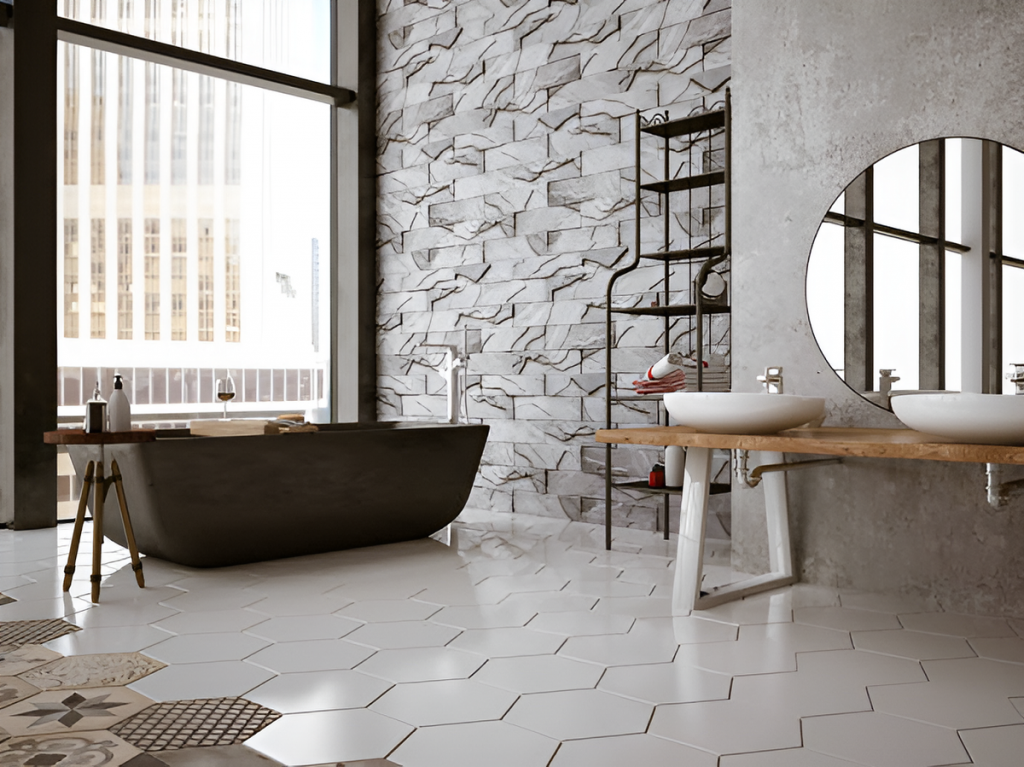
- Tile patterns influence space perception: Vertical, horizontal, diagonal, and geometric layouts can make walls taller, floors longer, and the room feel larger.
- Choose the right patterns for small bathrooms: Subway, herringbone, diagonal, chevron, and large-format tiles are particularly effective for creating openness.
- Color affects the illusion of space: Light, monochromatic, and glossy tiles enhance brightness and airiness, while dark colors should be limited to accents.
- Orientation and layout matter: Vertical tiles elongate walls, horizontal tiles widen rooms, and diagonal or chevron patterns expand visual floor space.
- Practical tips improve impact: Consistent patterns, light-colored grout, reflective surfaces, and minimal accent mosaics help maintain a spacious feel.
- Planning and installation are key: Accurate measurements, mockups, and professional installation for complex patterns ensure that tiles enhance space rather than clutter it.
Small bathrooms can be tricky to design. Cramped spaces, limited natural light, and awkward layouts often make them feel even smaller than they are. But with the right bathroom tile patterns, you can create the illusion of space, brighten up the room, and even add style without expanding the footprint. In this guide, we’ll explore everything from pattern types to tile colors and layouts that can make your small bathroom feel open and inviting.
Why Tile Patterns Matter in Small Bathrooms
When it comes to small bathrooms, every design choice counts. Tile patterns aren’t just decorative—they influence how the eye perceives space. Certain patterns can make walls feel taller, floors appear longer, or the entire room seem wider. For example, using specific floor tile patterns, like diagonal or large-format layouts, can instantly make a small bathroom feel more open and spacious.
Ignoring pattern choice can leave a bathroom feeling cluttered, while smart pattern placement enhances flow and light.
- Vertical patterns can elongate walls.
- Horizontal patterns can widen narrow spaces.
- Geometric or diagonal patterns can add depth.
- Large tiles reduce grout lines, making a room feel less busy.
Understanding these effects helps you choose patterns that maximize visual space.
What Are the Best Tile Patterns for Small Bathrooms?
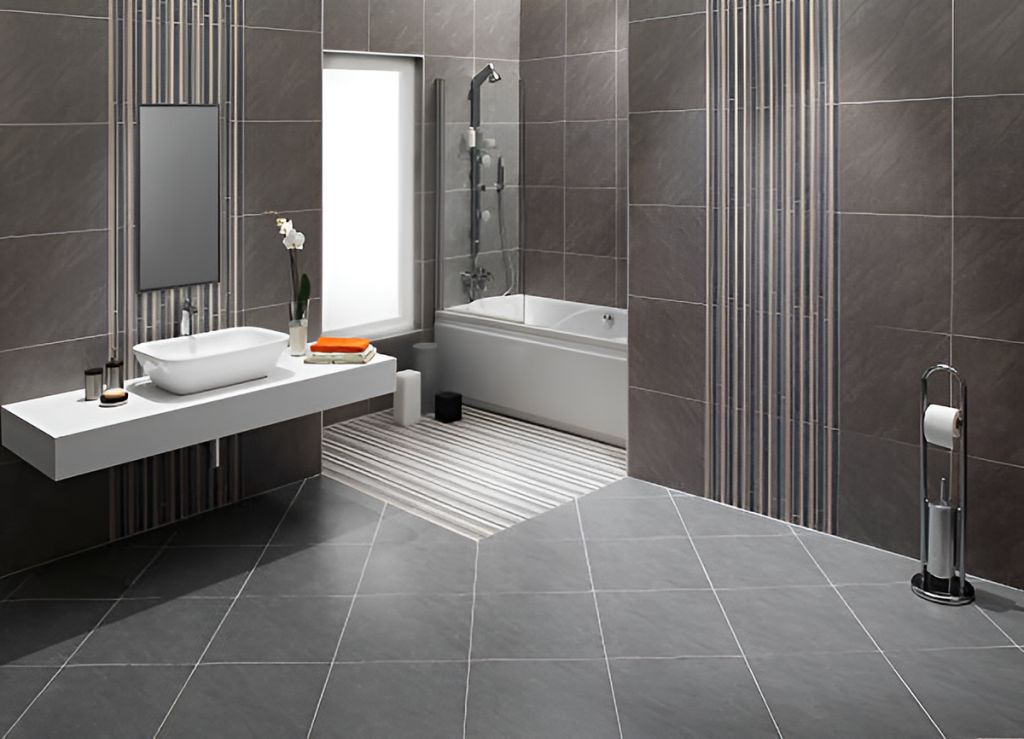
Several bathroom tile patterns work particularly well in small spaces. Here’s a closer look:
1. Subway Tile Pattern
A classic choice, the subway tile pattern features rectangular tiles arranged in an offset brick-like layout.
- Works well for walls and backsplashes.
- Reflects light, brightening the room.
- Creates a clean, timeless look.
Pro Tip: Use glossy tiles in lighter colors to further enhance the sense of space.
2. Herringbone Pattern
The herringbone pattern places rectangular tiles at a 45-degree angle to create a zigzag effect.
- Adds visual interest without overwhelming the space.
- Can make narrow floors appear longer.
- Works on walls, floors, or even shower niches.
For small bathrooms, pair it with neutral tones to keep the pattern elegant and airy.
3. Diagonal Pattern
Diagonal tile patterns place square or rectangular tiles at a 45-degree angle relative to walls.
- Gives the illusion of more floor space.
- Draws attention away from cramped corners.
- Ideal for both floor and wall applications.
Tip: Use subtle grout color contrast to make the pattern pop without feeling busy.
4. Chevron Pattern
Similar to herringbone but with tiles cut into a point, the chevron pattern is dynamic and modern.
- Directs the eye along the room, elongating floors or walls.
- Works best with medium-sized tiles in light or neutral tones.
A chevron shower floor or feature wall can make a tiny bathroom feel boutique-inspired.
5. Large Format Tiles
Sometimes, simplicity is best. Large-format tiles, with minimal grout lines, make small bathrooms feel uncluttered.
- Reduces visual noise.
- Can make floors or walls appear continuous.
- Perfect for creating a sleek, spa-like vibe.
Consider combining large floor tiles with smaller accent tiles for subtle patterning.
Can Color Choices Affect How Big a Bathroom Feels?

Absolutely. Tile patterns are important, but color can make or break the space illusion.
- Light colors (white, pale gray, soft pastels) make a room feel airy.
- Monochromatic schemes keep the eye moving and avoid chopping up the space.
- Glossy tiles reflect light, enhancing openness.
- Avoid dark colors on all walls—they can shrink the room visually.
Tip: Use darker colors for accents only, such as a feature wall or niche.
Should You Mix Tile Patterns in a Small Bathroom?
Mixing tile patterns can work if done strategically:
- Stick to one dominant pattern and use others sparingly.
- Combine a classic subway pattern with a small herringbone accent strip.
- Feature walls or shower backsplashes are perfect for subtle pattern mixing.
Too many patterns in a tiny bathroom can overwhelm the space, so balance is key.
How Does Tile Orientation Affect Perception of Space?
Tile orientation can dramatically alter perception:
- Vertical tiles: Make walls look taller; great for low ceilings.
- Horizontal tiles: Widen narrow rooms; ideal for tight corridors.
- Diagonal tiles: Expand small floors; draw attention to angles.
Experiment with layouts on paper or digitally before committing to avoid costly mistakes.
What Are Some Practical Tips for Small Bathroom Tiling?
Beyond patterns, a few practical considerations help your tiles enhance space:
- Use light-colored grout to maintain continuity between tiles.
- Reflective surfaces amplify natural and artificial light.
- Keep patterns consistent from floor to wall for seamless flow.
- Consider elongated subway tiles instead of standard squares for visual length.
- Limit ornate or tiny mosaics to small accent areas to avoid clutter.
These small tweaks make a big difference in perceived size.
Can Patterns Influence Mood in a Small Bathroom?
Yes. Tile patterns not only affect perception of space but also set the tone:
- Linear patterns = calm and orderly.
- Geometric patterns = modern and energetic.
- Diagonal or chevron = dynamic and playful.
- Large, minimal tiles = spa-like and relaxing.
Choosing the right pattern isn’t just about space—it’s about creating the right atmosphere.
How to Choose the Right Tile Material for Small Bathrooms
Material impacts both appearance and function:
- Ceramic: Affordable, easy to clean, versatile in patterns.
- Porcelain: Durable, moisture-resistant, works well for high-traffic areas.
- Glass: Reflective, ideal for small spaces but can be slippery.
- Natural stone: Luxurious, but heavier and may need sealing.
For small bathrooms, lightweight and reflective tiles often maximize space perception.
DIY vs Professional Installation: Does It Matter?
Installing tiles in small bathrooms can be challenging due to tight spaces:
- DIY: Cost-effective for simple patterns like subway tiles.
- Professional: Recommended for intricate patterns like herringbone or chevron to ensure precision.
- Accurate installation ensures that patterns align and grout lines stay straight, which is crucial in visually tight spaces.
How to Plan Your Small Bathroom Tile Layout
Step-by-step planning prevents design regrets:
- Measure your bathroom carefully.
- Choose a main tile pattern for the majority of the space.
- Decide if you want an accent wall or floor.
- Select complementary colors and grout shades.
- Mock up the pattern on paper or digitally.
- Order slightly extra tiles for mistakes or future repairs.
Planning ensures patterns enhance space rather than overcrowd it.
Can Lighting Improve the Effect of Bathroom Tile Patterns?
Yes. Proper lighting can amplify your pattern choices:
- Natural light makes light-colored patterns feel expansive.
- Recessed or wall-mounted lights highlight vertical or diagonal tiles.
- Avoid harsh overhead lights that cast shadows on small tiles.
Combine lighting strategy with pattern choice for maximum visual impact.
Common Mistakes to Avoid with Small Bathroom Tile Patterns
Even with the best tiles, some pitfalls can shrink your bathroom:
- Using too many contrasting colors.
- Overcomplicating patterns in tiny spaces.
- Choosing dark grout on light tiles, breaking up the visual flow.
- Ignoring the effect of ceiling height on vertical patterns.
- Skipping professional help for complex layouts.
Avoid these mistakes to ensure your bathroom feels bigger, not cluttered.
Conclusion: Making Small Bathrooms Feel Bigger with Tiles
With the right bathroom tile patterns, even the tiniest bathroom can feel open, bright, and stylish. Focus on light colors, simple layouts, vertical or diagonal patterns, and reflective surfaces. Incorporate a touch of personality with accent tiles, but don’t overcomplicate the space. When planned well, patterns don’t just decorate—they transform the room.
Whether you’re doing a DIY refresh or a full renovation, understanding how tile patterns interact with space, color, and light ensures your small bathroom looks bigger, feels comfortable, and remains functional for years to come.
