
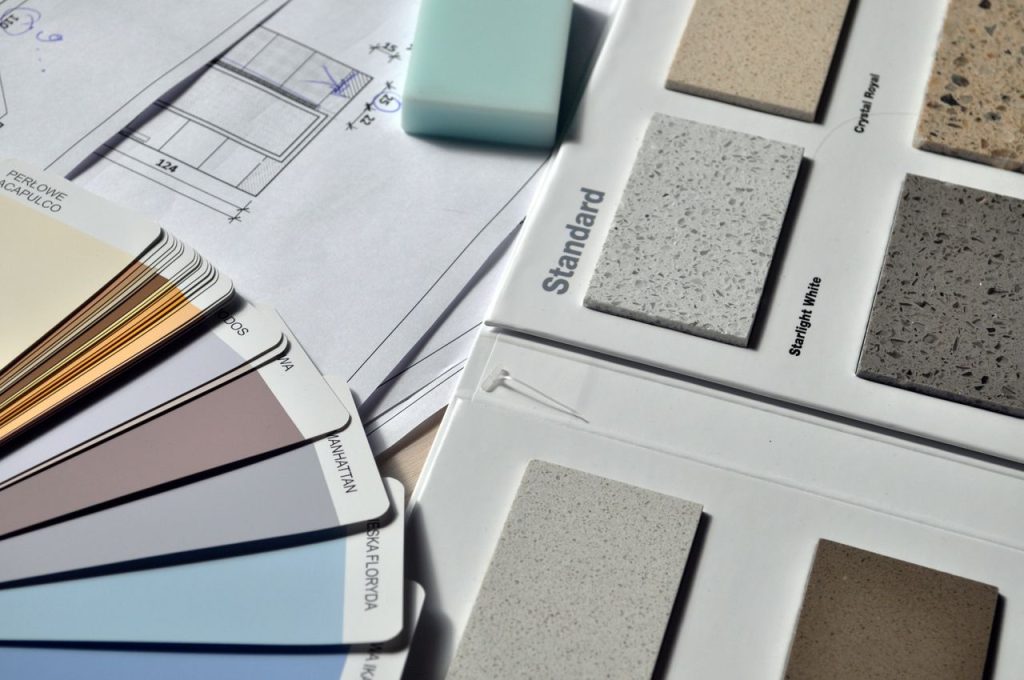
Renovations have a reputation for dragging on, and most of the time the culprit isn’t the construction crew. It’s the hundreds of small choices made (or delayed) long before anyone picks up a hammer. Paint colors, tile patterns, cabinet pulls, faucet finishes — each decision feels minor on its own, but together they form the scaffolding that holds a project’s schedule in place.
The homeowners who finish on time tend to share one habit: they front-load their decisions. They finalize the look, the materials, and the layout before demolition begins, which means the trades can keep moving without waiting for someone to pick a countertop. It’s a simple shift in thinking, but it can shave weeks or even months off the calendar.
What follows is a research-backed look at how smart design planning influences project speed. These aren’t aesthetic preferences dressed up as advice. They’re the operational choices that quietly determine whether your contractor is building or waiting.
Why Early Design Choices Set the Pace of Everything
The first stretch of any renovation — the planning phase — is where most of the schedule gets locked in, even though nothing visible is happening yet. During this period, drawings get approved, permits move through the city, and material orders go out. If design decisions are still up in the air, every downstream step slips.
According to Block Renovation, a full-house project usually runs 8 to 16 months from the first planning meeting to the final walkthrough, with only four to nine of those months being active construction. That gap between “total duration” and “hands-on building” is where design indecision lives. The longer you spend circling choices, the more that first number grows while the second stays the same.
Think of planning as the real engine of the project. Framing and drywall move fast once they start. What slows everything down is a client still debating between two vanities six weeks into construction.
How Long Does a Home Renovation Take When Materials Run Late?
Lead times are the invisible timeline killer. A beautiful tile from overseas might take ten weeks to arrive. A custom range hood could take twelve. If those items aren’t ordered during design development, they become the bottleneck that pauses everything.
When people ask how long does a home renovation take, the honest answer depends less on construction speed and more on procurement discipline. According to OpenDoor, custom cabinetry alone can require four to eight weeks for fabrication and delivery heading into 2026, and cabinetry is almost always on the critical path for kitchens and baths.
To keep materials from becoming the chokepoint, the smartest projects pre-order these categories early:
- Custom cabinetry and millwork
- Specialty tile, stone slabs, and imported flooring
- Plumbing fixtures with long manufacturer lead times
- Appliances, especially European or professional-grade models
- Custom windows, doors, and glass shower enclosures
- Lighting fixtures, particularly anything semi-custom
The 12-to-16 Week Rule Designers Swear By
There’s a reason seasoned designers finalize selections months before installation day. According to Foyr, custom upholstery, case goods, lighting, and specialty materials should be ordered 12 to 16 weeks ahead of when they’ll actually be installed. That buffer accounts for production queues, shipping delays, and the inevitable damaged-in-transit replacement.
Treating that window as a firm rule — not a suggestion — turns design from a creative phase into a logistics phase. Which is exactly what it needs to be if you want to hit your dates.
Standard vs. Custom: The Choice That Changes Everything
Nothing stretches a timeline like custom work. A stock vanity ships in a week. A custom one built to your exact dimensions takes two months or more. Multiply that across cabinets, doors, trim, and built-ins, and the schedule swells quickly.
That doesn’t mean you have to give up personality. The trick is choosing where to go custom and where to lean on stock or semi-custom options. Save the splurge for the pieces that define the space — maybe the kitchen island or the primary bath vanity — and use off-the-shelf for everything else. This is a common strategy among professionals doing high-end Interior Design work on tight schedules, because it keeps the look elevated without blowing up the calendar.
A few places where standard options rarely compromise the finished result:
- Interior doors and door hardware
- Trim profiles and baseboards
- Secondary bathroom vanities and mirrors
- Closet systems and pantry shelving
- Hallway and utility lighting
Sticking With the Plan Once Construction Starts

Change orders are the single biggest schedule-wrecker once the crew is on site. Every time a homeowner decides to move a wall, swap a tile, or add a window after framing, the ripple effect touches electrical, plumbing, inspections, and material reorders. A two-day change can easily become a two-week delay.
Research backs this up. According to CMK Construction, a Physica A study found that delays affect roughly 75% of construction projects, with the median delay running between 20% and 40% of total project duration. Mid-project design changes are a major driver of that pattern. The fix isn’t to avoid changes entirely — sometimes they’re unavoidable — but to make as many decisions as possible before demolition and resist tweaking them once trades are engaged.
This is also where understanding typical renovation durations by project type gives you a realistic baseline for what your own schedule should look like before any disruptions.
Why a Decision Deadline Keeps Everyone Honest
Experienced project managers set hard cutoff dates for every category of selection — tile by week three, plumbing fixtures by week four, paint by week six. After the deadline, changes trigger a change order fee and a timeline adjustment. It sounds strict, but it protects the homeowner more than it protects the contractor.
Deadlines force closure. Without them, homeowners keep second-guessing, and contractors keep absorbing the slippage.
Layout and Scope Choices That Keep the Calendar Short
Not every design decision is about materials. Some of the biggest schedule impacts come from the shape of the project itself. Moving plumbing to a new wall adds weeks. Relocating a load-bearing element can add a month. Expanding scope mid-project nearly always pushes the finish date out.
Thoughtful design respects the existing bones of the house when speed matters. Keeping the kitchen sink roughly where it was, reusing existing electrical runs, and working within the current footprint are all choices that preserve timeline without sacrificing the end result. The most efficient renovations look dramatically different from before — but under the surface, a lot stayed where it was.
Scope creep is the other quiet enemy. “While we’re at it, let’s redo the hallway” sounds innocent, but every add-on brings its own permits, materials, and inspections.
High-impact layout decisions that tend to protect the schedule:
- Keeping plumbing fixtures near existing supply lines
- Maintaining the original kitchen work triangle
- Avoiding structural changes when cosmetic ones will do
- Grouping new electrical on shared circuits where code allows
- Locking scope before demolition and documenting it in writing
Coordinating Trades Through Smart Finish

Finish selection isn’t just about picking what looks good — it’s about sequencing so that every trade can do its work without stepping on another’s. When finishes are chosen late, electricians don’t know where to place sconces, tile setters don’t know where to stop the backsplash, and painters show up before the trim profile has been finalized. The result is a crew standing around, or worse, redoing work.
A finish schedule that’s locked in before construction gives each trade a clear target. The electrician knows the pendant height because the island dimensions are set. The plumber knows the rough-in because the vanity has been ordered. The tile setter knows the pattern because the shop drawings are approved. This kind of alignment is what separates renovations that flow from ones that stall.
Sequencing Choices That Prevent Rework
A few finish decisions carry outsized influence over how smoothly the trades move through the house:
- Flooring thickness, because it determines door undercuts and transition heights
- Tile layout and grout lines, because they dictate where electrical boxes land
- Cabinet dimensions, because they drive plumbing rough-in locations
- Lighting selections, because junction box placement depends on fixture size
- Hardware finishes, because mixing metals late forces reorders across categories
Making these calls early isn’t about being rigid. It’s about giving the crew a stable target so they can execute without pausing to ask questions that should have been answered weeks ago.
Building a Design Team That Moves at Your Speed
The people you hire to help with design decisions matter as much as the decisions themselves. A designer who takes three weeks to respond to a tile question is going to cost you more time than any supply chain issue. Conversely, a decisive design partner who understands construction sequencing can compress your schedule meaningfully.
Look for designers who have worked alongside contractors before, not just ones who produce beautiful mood boards. The difference shows up in how they write specifications, how quickly they turn around revisions, and whether they understand what a two-week lead time means for the framer waiting downstream.
Clear communication channels also matter. Weekly design meetings, a shared selection spreadsheet, and a single point of contact between the design side and the build side will do more for your timeline than any clever product substitution. When everyone is reading from the same page, questions get answered in hours instead of days.
The Mindset Shift That Saves Weeks
Most of the advice above comes down to one underlying principle: treat design as a project management discipline, not a creative hobby. That’s not to strip the joy out of choosing finishes — the fun parts are still fun. But the homeowners who finish on schedule approach their choices with the same rigor a contractor brings to ordering lumber.
They set deadlines. They make decisions and move on. They resist the urge to keep browsing once a selection is made. They understand that a “good enough” choice made in week two beats a “perfect” choice made in week ten, because the perfect choice costs them a month of waiting.
This mindset is uncomfortable at first, especially for homeowners who’ve been dreaming about their renovation for years. But the trade-off is real. Every week of indecision in the design phase is a week added to the back end of the project, usually with interest.
Conclusion
Renovation timelines aren’t dictated by crews or weather or even supply chains as much as they’re shaped by design discipline. The projects that wrap on time are the ones where decisions got made early, materials got ordered on schedule, and the plan held steady once construction began. None of that requires a bigger budget or a more glamorous design — it just requires treating each choice as a scheduling event rather than an open-ended question.
If you’re planning a renovation, start making decisions before you think you need to. Lock down cabinetry, tile, fixtures, and lighting before demolition day. Build buffers into your lead times. Say no to mid-project scope changes unless they’re truly necessary. These habits aren’t glamorous, but they’re what separate a six-month project from a twelve-month one.
The homes that come together quickly aren’t the ones with the simplest designs. They’re the ones where someone made the call, signed the order, and kept moving. That’s the quiet secret behind every renovation that finishes on time.
